Ampelos

A history of wine

Eight thousand years in a glass

From clay jars buried in the Caucasus to a warming planet: 17 moments that shaped the wine in your glass. Scroll through the story, or jump straight to a chapter.

c. 6000 BCE to today
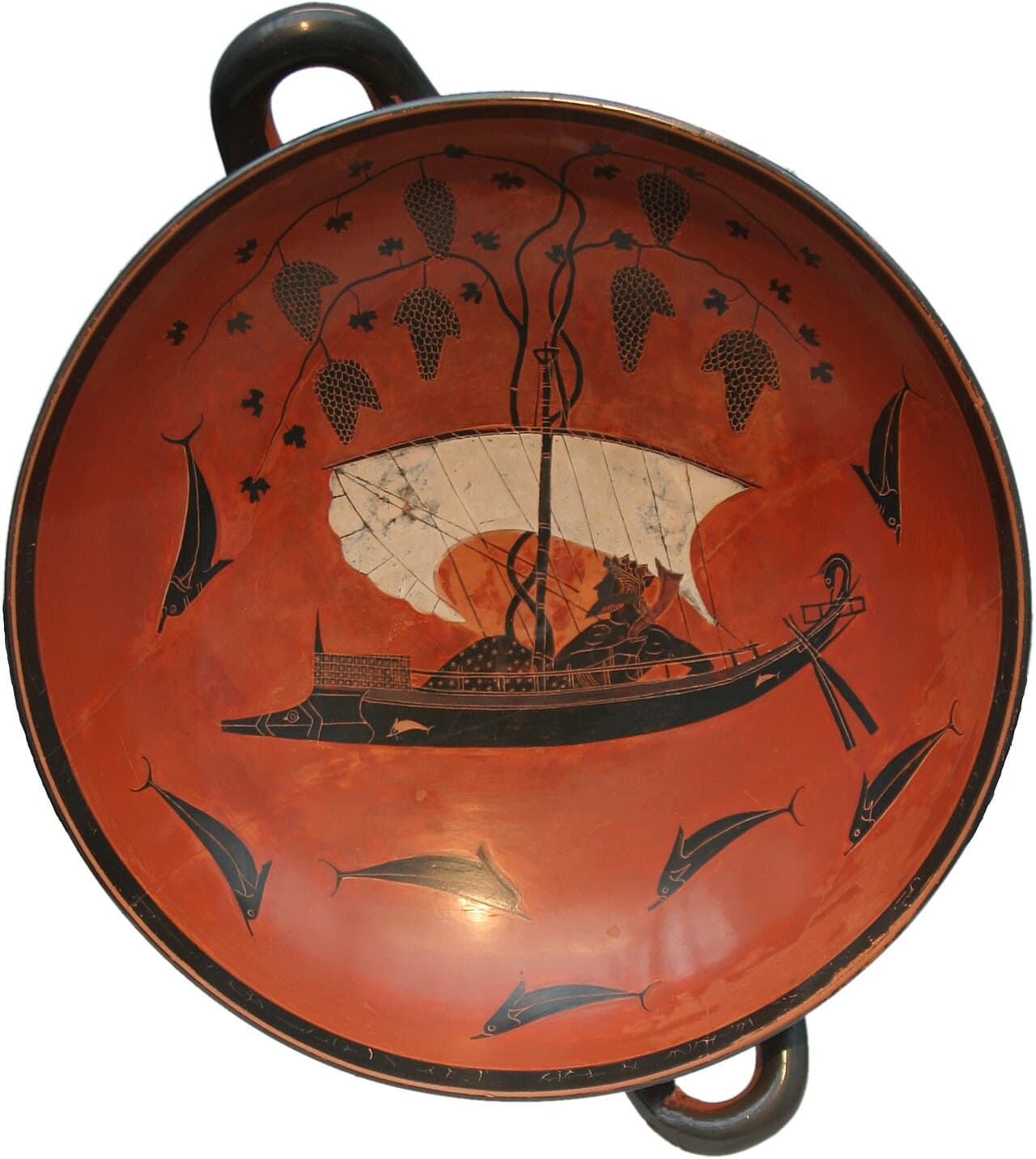
Dionysus reclining in a ship whose mast is wreathed in grapevines, surrounded by dolphins: the interior of a Greek drinking cup, about 530 BCE.
Dionysus at sea, on a cup by Exekias, c. 530 BCE. Photo: Matthias Kabel, CC BY 2.5.

Jump to a chapter

Chapter I

Origins

Before writing, there was wine.

The first winemakers left no names, only clay jars, grape seeds and the chemical trace of tartaric acid. From the Caucasus to the Nile to the Aegean, the vine became a crop, a luxury and a god.

c. 6000 – 500 BCE·3 milestones

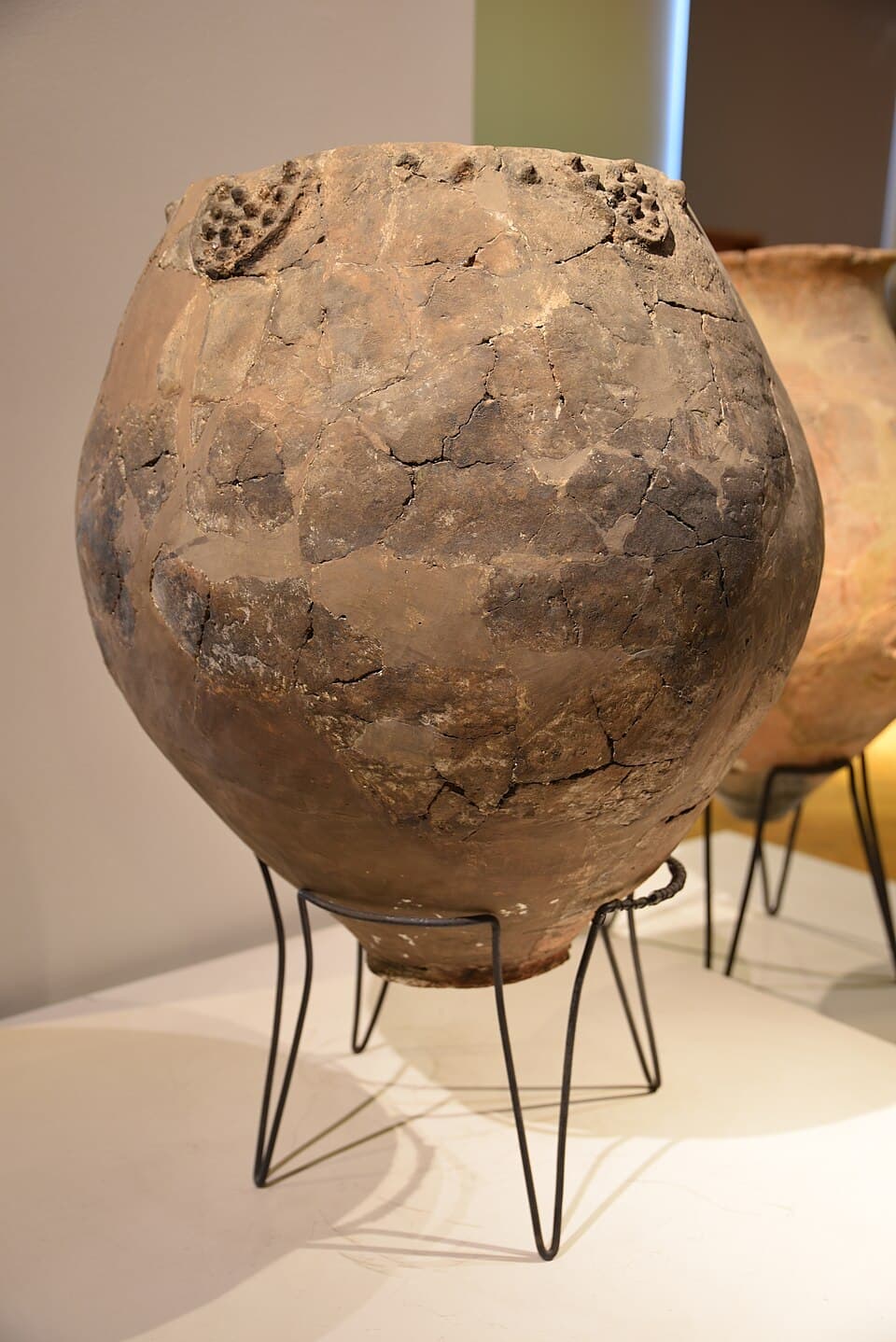
A cracked terracotta jar with moulded clusters of grapes on its shoulder, on a display stand in a museum.
Terracotta kvevri with moulded grape clusters, first half of the 6th millennium BCE, from Khramis Didi Gora. National Museum of Georgia, Tbilisi. Credit: Carole Raddato, CC BY-SA 2.0.

The Caucasus · Georgia

c.6000BCE

The first wine

In the hills south of Tbilisi, Neolithic villagers pressed grapes and left them to ferment in large clay jars. When archaeologists tested pottery from two sites, Gadachrili Gora and Shulaveris Gora, they found tartaric acid, the chemical signature of grapes, in vessels about 8,000 years old. Reported in 2017, it is the earliest evidence of winemaking yet found.

The method never died out. Georgians still ferment wine in egg-shaped clay qvevri buried in the cellar floor, a tradition UNESCO recognised in 2013, and grapes like Saperavi still grow in Kakheti, in the east of Georgia. Genetic studies suggest the vine was first domesticated somewhere in this corner of the world, between the Caucasus and Anatolia.

Older than the winery

About 1,900 years later, a cave at Areni in Armenia held the oldest winery known: a treading floor, a press and fermentation vats, dated to around 4100 BCE.

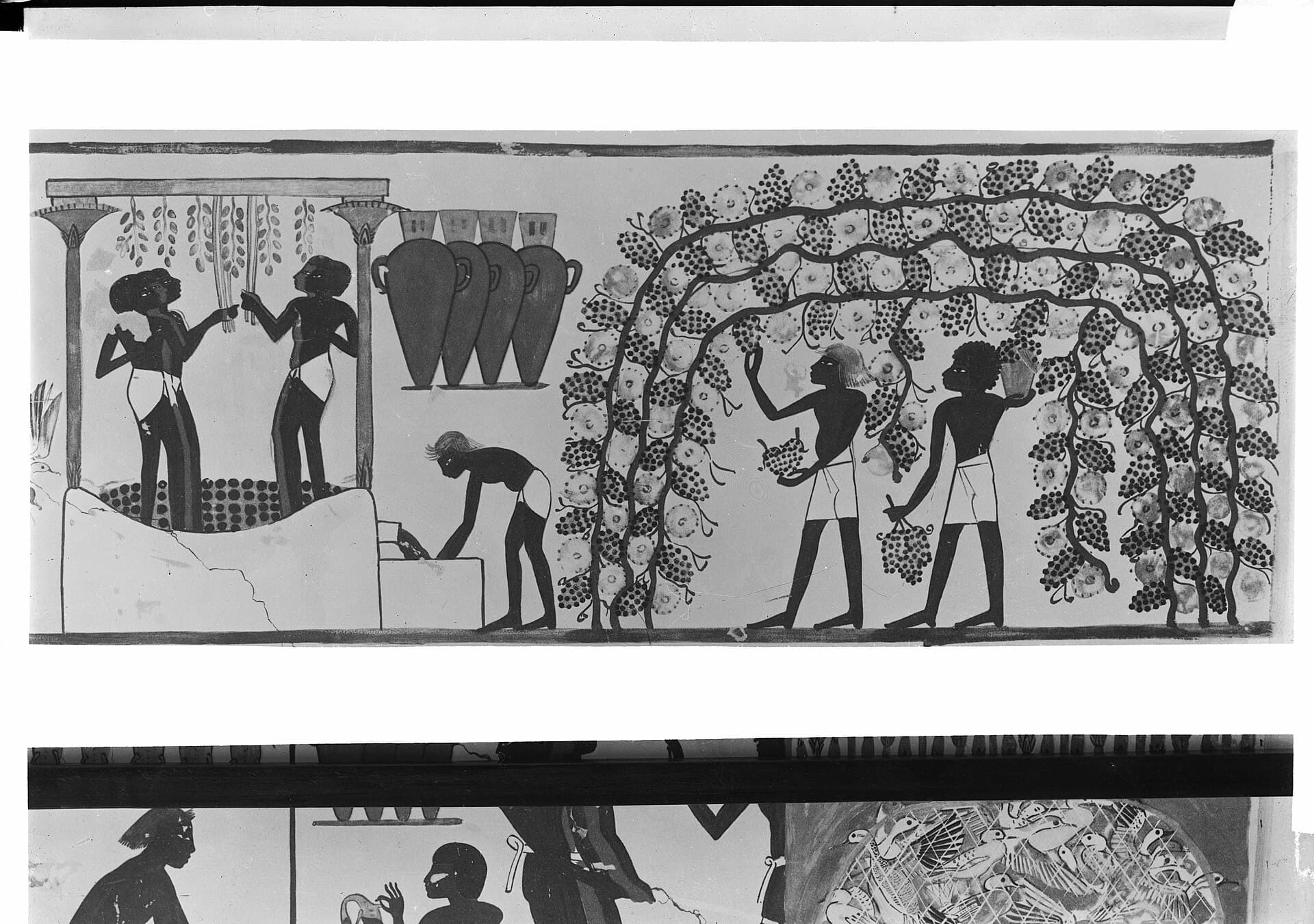
A black-and-white photograph of a tomb painting: men picking grapes from a vine arbour and treading grapes in a vat beside a row of wine jars.
Picking and treading grapes: a wall painting in the tomb of Nakht at Thebes (TT52), c. 1400 BCE. Archive photograph, 1905–1914. Credit: Archivio fotografico, Museo Egizio, Turin, CC0.

The Nile · Egypt

c.1323BCE

Wine gets a label

Wine arrived in Egypt as an import. Some 700 jars, filled with wine from the Levant, were buried with a ruler at Abydos around 3150 BCE. By the New Kingdom the pharaohs owned vineyards in the Nile Delta, and tomb paintings such as Nakht's at Thebes show every step: picking, treading in a vat, pouring the juice into jars.

The jars in Tutankhamun's tomb, sealed around 1323 BCE, carry what may be the first wine labels: dockets naming the year of the reign, the estate and the chief vintner. It is the same information we still look for on a bottle today: a place, a maker and a vintage.

A drink for the few

Wine in ancient Egypt belonged to the court, the temple and the tomb. Beer was the everyday drink.

Follow the thread

The inside of a Greek drinking cup showing Dionysus reclining in a ship whose mast is wreathed in grapevines, surrounded by dolphins.
Dionysus sailing among dolphins, with grapes growing from the mast. Interior of a black-figure cup by Exekias, c. 530 BCE. Staatliche Antikensammlungen, Munich. Credit: Matthias Kabel, CC BY 2.5.

The Aegean & the Mediterranean

c.600BCE

The vine goes to sea

Greek sailors and settlers turned wine into a Mediterranean trade. Around 600 BCE colonists from Phocaea founded Massalia, today's Marseille, and vines followed them into Gaul. In southern Italy and Sicily, which the Greeks knew as Oenotria, 'the land of vines', they planted on a large scale. Amphorae stamped with the maker's home town (Thasos, Chios, Rhodes) were an early form of provenance.

At home, wine was ritual. At the symposium it was mixed with water and shared under the eye of Dionysus, who on this cup, made around 530 BCE, sails a ship with vines climbing its mast. Wine has been made on Santorini since antiquity, and its bone-dry Assyrtiko still grows there in the volcanic soil.

Never neat

Drinking undiluted wine was considered barbaric. The Greeks mixed it with water in a large bowl, often three parts water to one of wine.

Chapter II

Rome & the Cloister

An empire plants the vine. Monks keep it.

Rome carried viticulture across Europe and wrote it down. When the empire fell, monasteries kept the knowledge alive, and began to notice that the land itself decided what ended up in the glass.

1st – 12th century·3 milestones

A Roman mosaic of two grape harvesters beneath a trellis, one lifting a bunch of grapes above a full basket.
The grape harvest in a Roman mosaic from Cherchell, Algeria (ancient Caesarea). Credit: JPS68 (scan), Public domain.

The Roman Empire

c.77CE

Wine becomes an empire's business

Rome made viticulture systematic. Columella, whose farming manual dates from about 60 CE, described pruning, training vines on supports and choosing a site. Pliny the Elder, in his Natural History of about 77 CE, catalogued the grapes and ranked the great wines of his day. As the legions advanced, vines went with them: up the Rhône, into Bordeaux, along the Mosel and the Rhine.

The legacy is still visible. Vines that may be ancestors of Pinot Noir were probably already growing in Burgundy in Roman times, though that cannot be proven, and the wooden barrel, which Rome seems to have borrowed from Gaul as a sturdier way to ship wine than the amphora, later became the vessel for ageing it.

An emperor's uprooting

In 92 CE Domitian reportedly ordered half the vineyards in the provinces pulled up, probably to protect the grain supply. It was never fully enforced, and was lifted about two centuries later.

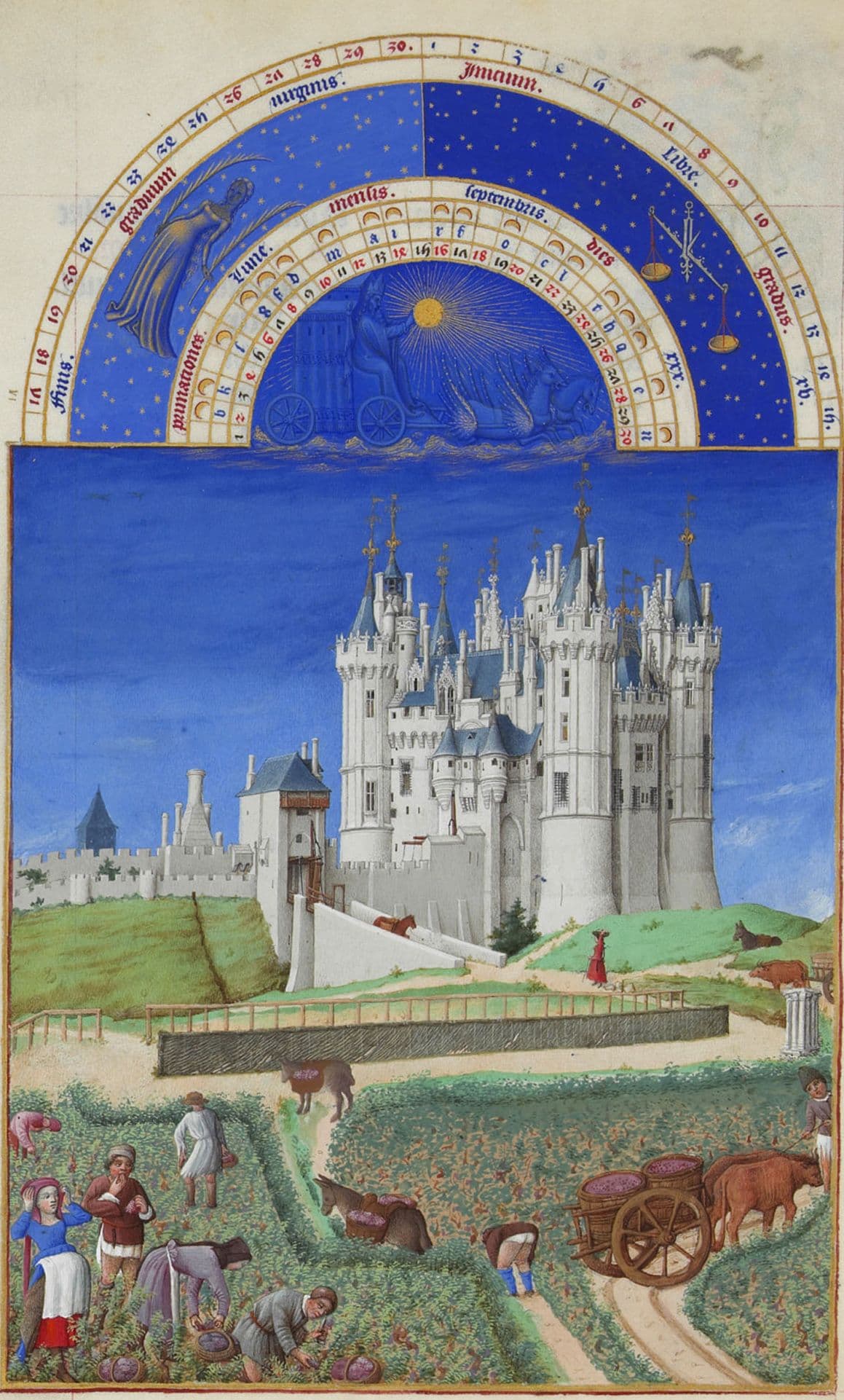
A medieval manuscript page: a white castle above vineyards where peasants pick grapes into baskets, under a calendar arc of the zodiac.
September: the grape harvest below the Château de Saumur, from Les Très Riches Heures du duc de Berry, c. 1412–16, a late medieval view of the vintage. Credit: Limbourg brothers, Public domain.

Burgundy · the Rhine

c.1100CE

The monks who mapped the vineyard

When Roman order collapsed, the Church kept viticulture going. Wine was needed for the Mass, and monasteries had the land, the labour and the literacy to keep records. Benedictines at Cluny and, from 1098, Cistercians at Cîteaux were given vineyards across Burgundy. From around 1110 the Cistercians assembled the Clos de Vougeot, which they walled in the 14th century and held until the Revolution.

What set the monks apart was patience. Generations of careful record-keeping showed that some slopes reliably gave finer wine than their neighbours, and they marked the boundaries with walls and stones. This is the root of terroir and of the climats, the named parcels of the Côte d'Or, including the Côte de Nuits, that UNESCO listed in 2015. On the Rhine, Cistercians at Kloster Eberbach, founded in 1136, did the same for the Rheingau.

Clos means enclosure

Clos de Vougeot's stone walls still stand. Its monks' estate was sold off in the Revolution, and today the vineyard is divided among dozens of owners.

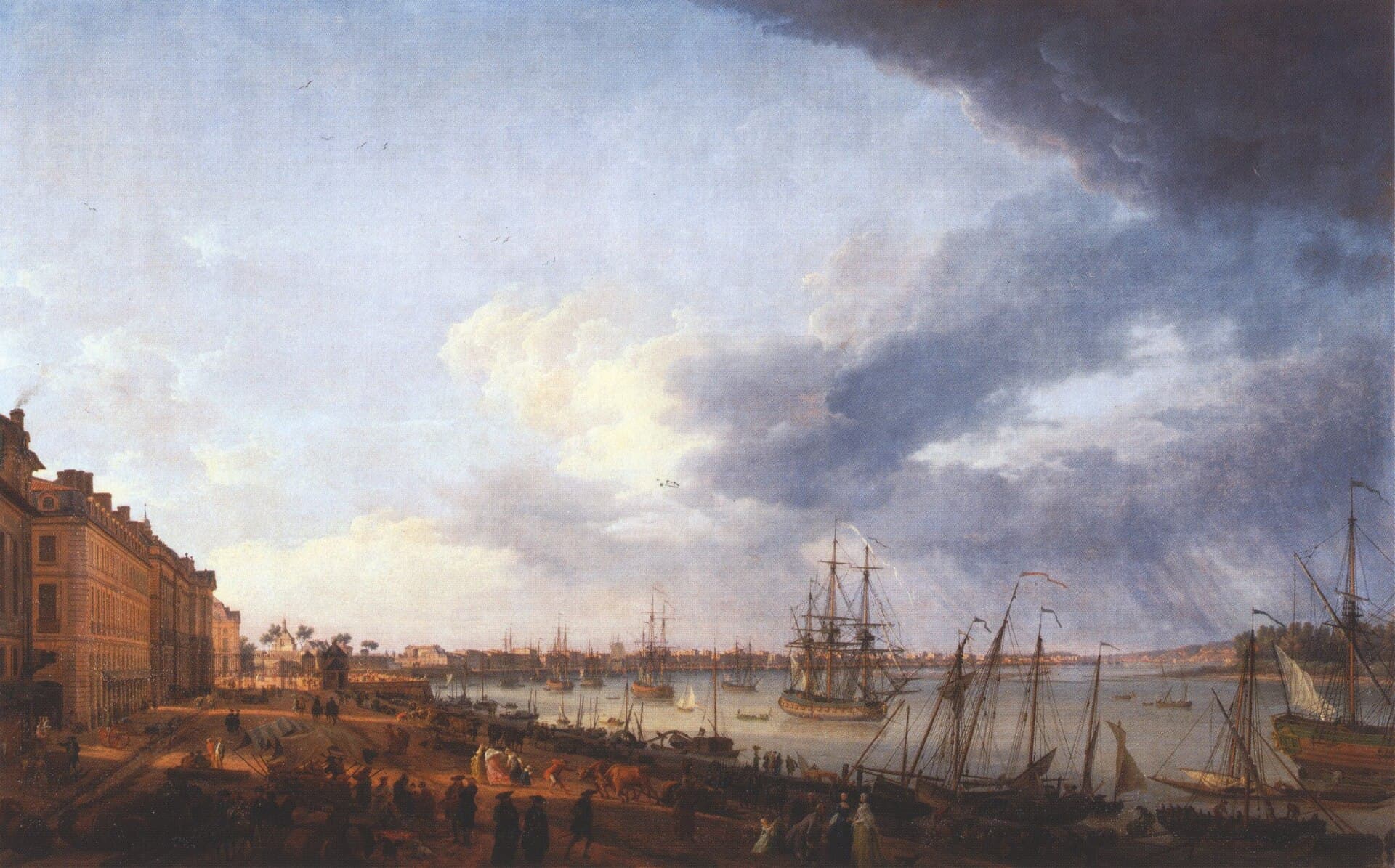
A painting of the Bordeaux waterfront under a stormy sky, with merchant ships at anchor and carts and figures on the quay.

Bordeaux · Aquitaine

1152

Claret and the English crown

In 1152 Eleanor of Aquitaine married Henry Plantagenet, soon to be Henry II of England, and her duchy, Bordeaux included, passed to the English crown. For three centuries, until 1453, Bordeaux shipped wine to England on privileged terms. The pale red the English called claret, from the French clairet, crossed the Channel in fleets each autumn.

The trade made the city rich and the region a byword. When English rule ended, Dutch, Irish and English merchants of the Chartrons quarter kept it going and built Bordeaux into the world's fine-wine market. The trade left its mark on English: a ship's 'tonnage' comes from the tun, the wine cask.

Still the standard

A Bordeaux barrel, the barrique, holds 225 litres, or exactly 300 bottles.

The port of Bordeaux, seen from the Quai des Chartrons. Joseph Vernet, 1758. Credit: Joseph Vernet, Public domain.

Chapter III

Fine Wine & Far Horizons

Wine learns to age, to travel and to be ranked.

Strong bottles and corks turn wine into something to keep. Rulers draw the first borders around it, merchants rank it, and colonists carry the vine to every continent that will take it.

1659 – 1855·4 milestones

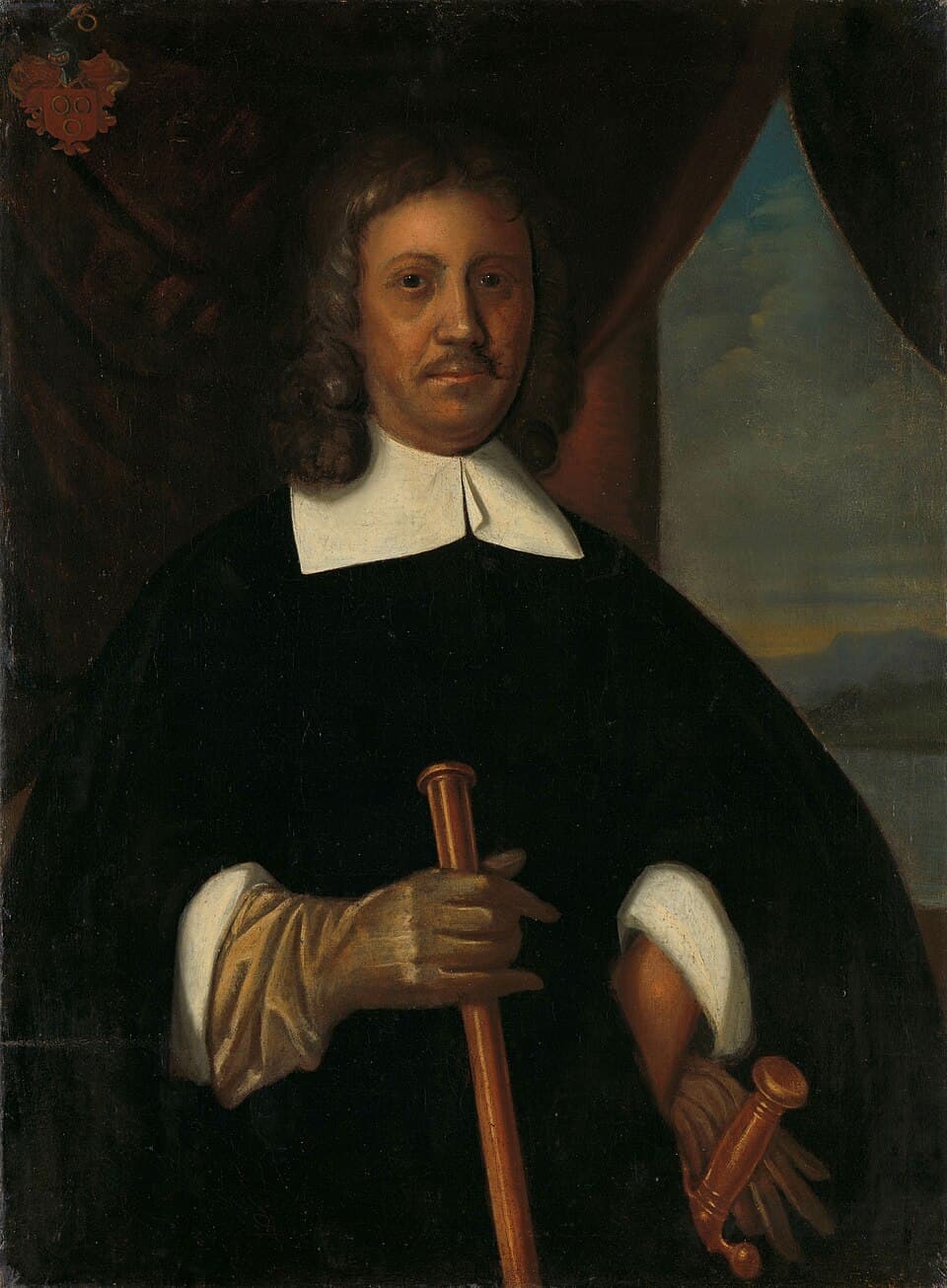
An oil portrait of a man in a black coat and white collar, holding a baton, with a dark red curtain and a distant landscape behind him.
Jan van Riebeeck (1619–1677), first commander of the Dutch settlement at the Cape. Portrait, c. 1660. Rijksmuseum. Credit: Anonymous, CC0.

The Cape of Good Hope

1659

The vine leaves Europe

Wherever Europeans settled, they planted vines: for the Mass, for the table, and to keep crews healthy on long voyages. Jan van Riebeeck, commander of the Dutch East India Company's station at the Cape, wanted wine against scurvy, and had cuttings sent from Europe. The first vines were planted in 1655, and four years later he recorded the first wine.

In 1685 his successor Simon van der Stel founded Constantia, whose sweet wine became famous in Europe. Over the next two centuries the vine followed the flag, and one grape followed the Spanish: Listán Prieto, carried to Mexico, Chile and California, where it became the Mission grape. Everything else on the map came later.

Today, God be praised, wine was pressed for the first time from Cape grapes.

Jan van Riebeeck's journal, 2 February 1659
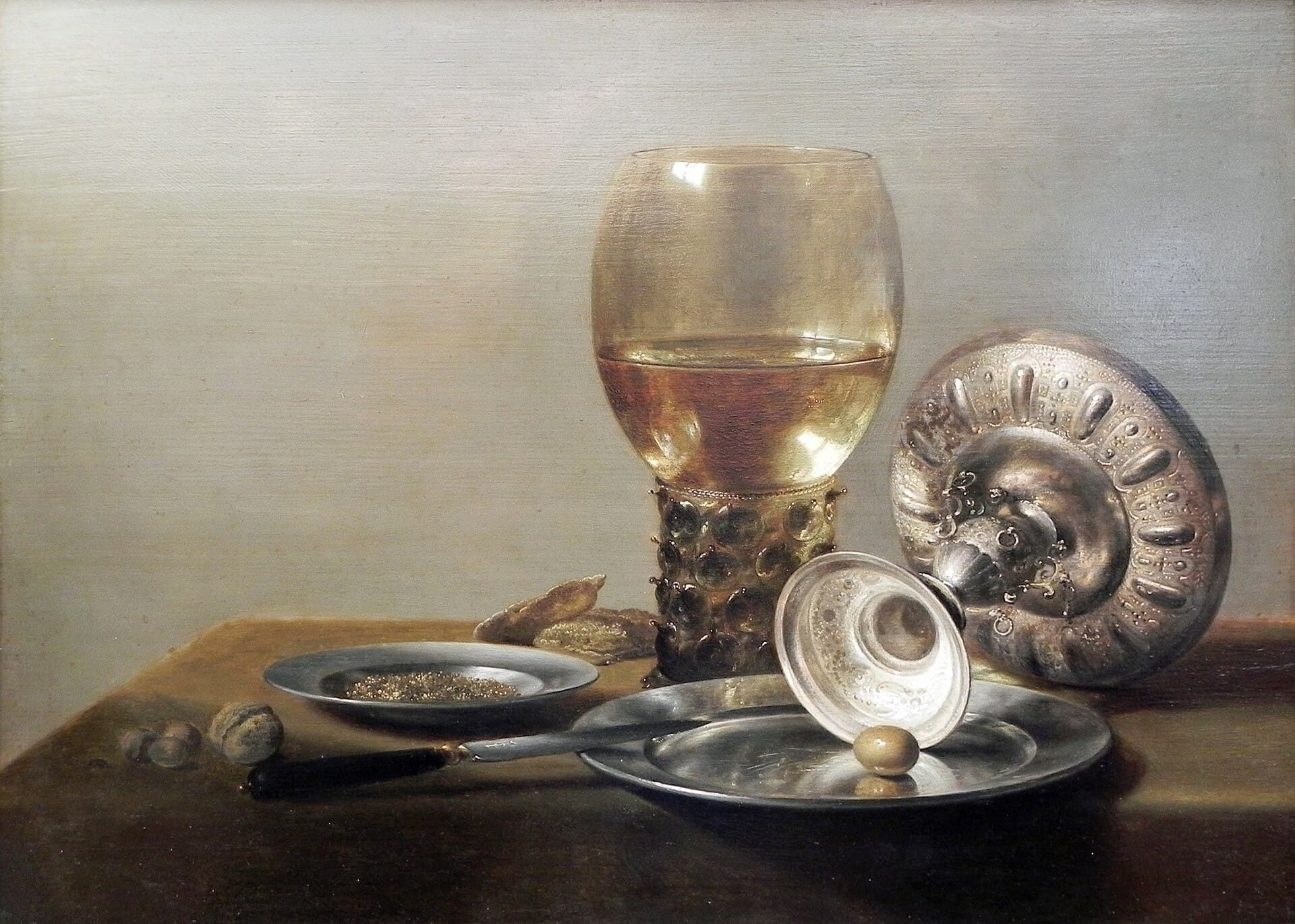
A Dutch still-life painting of a tall roemer glass of white wine beside an overturned silver tazza, a pewter plate and walnuts on a table.
Still life with a roemer of white wine and a silver tazza. Pieter Claesz, c. 1625–45. Credit: Pieter Claesz, Public domain.

London · Bordeaux · Champagne

1660s

Glass, cork and the birth of fine wine

Until the 1600s most wine was drunk within a year, straight from the cask, and much of it went sour. Then English glassmakers, firing their furnaces with coal, began to make strong, dark bottles, and corks let them be sealed and laid on their sides. Wine could now travel, keep and improve. Ageing, and with it fine wine, had become possible.

Fine wine soon acquired names. A year after the scientist Christopher Merret told the Royal Society how English vintners made wine sparkle by adding sugar, Samuel Pepys tried 'Ho Bryan' at a London tavern, an early notice of Haut-Brion from Graves, a Bordeaux estate sold by name. Merret wrote six years before Dom Pérignon arrived at Hautvillers in Champagne, where the monk is remembered for blending, not for inventing the bubbles.

…and here drank a sort of French wine called Ho Bryan, that hath a good and most particular taste that I never met with.

Samuel Pepys, diary, 10 April 1663

Meanwhile, in the vineyard

Around this time in south-west France, a chance crossing of two neighbouring grapes produced a new one: Cabernet Sauvignon. Nobody would know its parents for another 330 years.

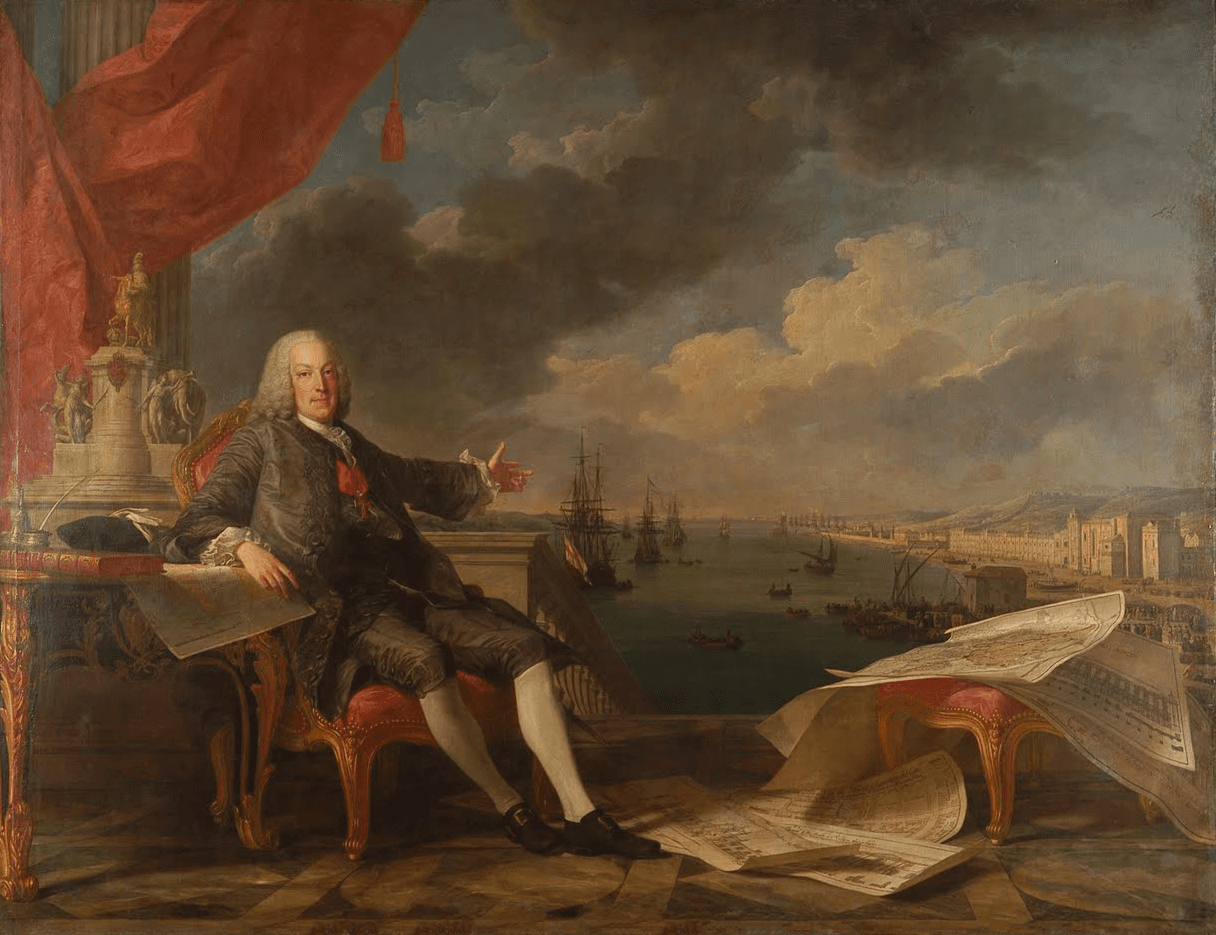
A portrait of a man in a powdered wig seated at a table strewn with maps and plans, gesturing towards a harbour view.
The Marquis of Pombal with plans for the rebuilding of Lisbon. Louis-Michel van Loo and Claude-Joseph Vernet, 1766. Credit: Van Loo & Vernet, Public domain.

Tuscany · Tokaj · the Douro

1716–56

Lines on the map

By the 18th century fraud was rife and famous names were being borrowed. Rulers answered by drawing lines. In 1716 Cosimo III de' Medici issued an edict fixing the limits of four Tuscan zones, Chianti among them. In 1737 a royal decree in Hungary set the borders of Tokaj, home of Furmint, and had its vineyards ranked. It is often called the world's first classification of a wine region.

Portugal followed in 1756. The Marquis of Pombal, the minister who rebuilt Lisbon after the 1755 earthquake, chartered a company to regulate Port and within a few years had granite boundary markers set around the Douro's vineyards. These were the first steps toward the idea that a wine's name should mean a specific place, a principle that became law in the 20th century.

Stones in the hills

Some of Pombal's original granite markers still stand among the Douro's terraces, more than 250 years on.

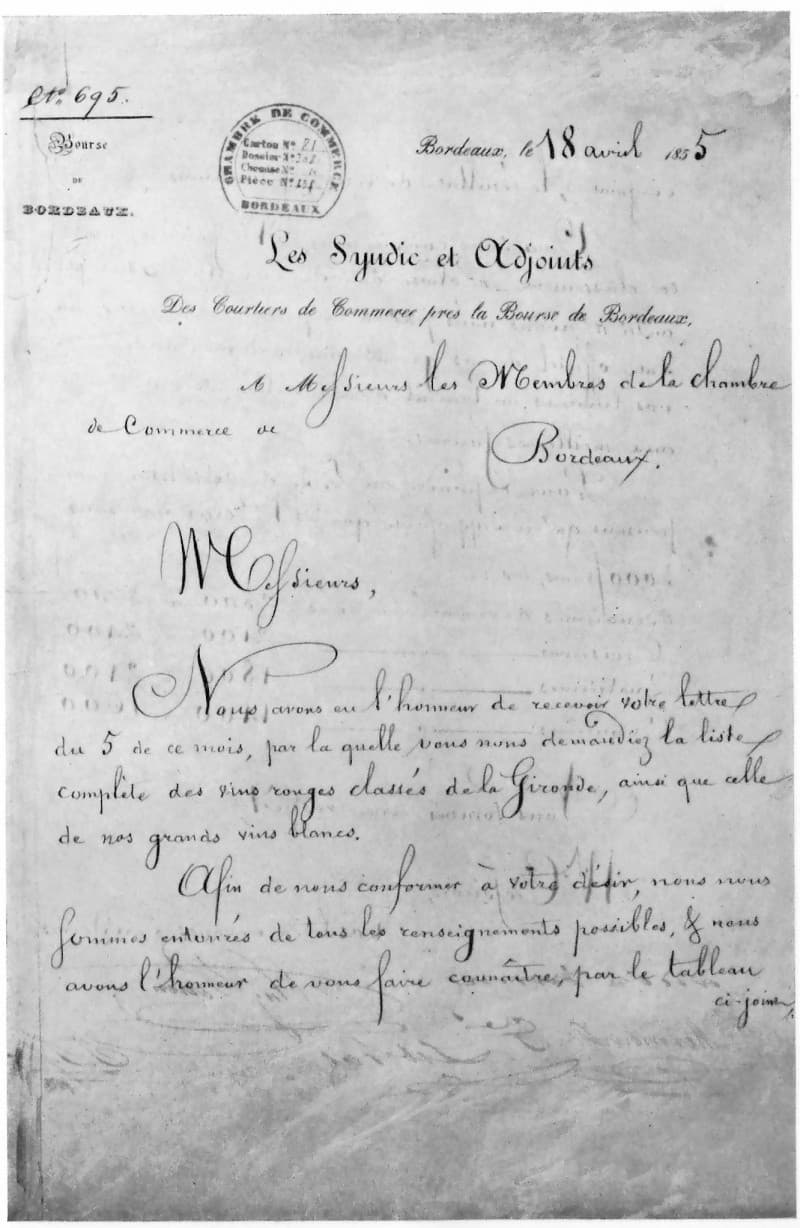
A handwritten letter dated Bordeaux, 18 April 1855, from the wine brokers to the members of the Chamber of Commerce.
The brokers' cover letter to the Chamber of Commerce, Bordeaux, 18 April 1855, sent with the list. Credit: Chambre de commerce de Bordeaux, Public domain.

Bordeaux · the Exposition Universelle

1855

Bordeaux ranks itself

For the Paris Exposition Universelle of 1855, Napoleon III wanted the best of France on show, and Bordeaux's Chamber of Commerce asked the city's wine brokers for a list of its finest wines. Their reply, dated 18 April 1855, ranked sixty reds from the Médoc, plus Haut-Brion from Graves, into five 'growths', and set the sweet wines of Sauternes into tiers of their own, with Yquem alone at the top.

The ranking rested on price and reputation, not on a tasting: what each château's wine had actually fetched over the years. It was meant as a shop window, not a legal code, yet it has barely changed. The first growths were Lafite, Latour, Margaux and Haut-Brion, and only one château has moved up since. Read more about the idea of a cru.

The only promotion

Mouton Rothschild was raised to First Growth in 1973, after decades of campaigning by Baron Philippe de Rothschild. It is the only change the list has ever seen.

Chapter IV

Blight & Law

A louse destroys the old world. Law rebuilds it.

A root-feeding insect from America ruins Europe's vineyards within a generation. What follows, from grafting to appellation law, is the foundation everything else on this page stands on.

1863 – 1935·2 milestones

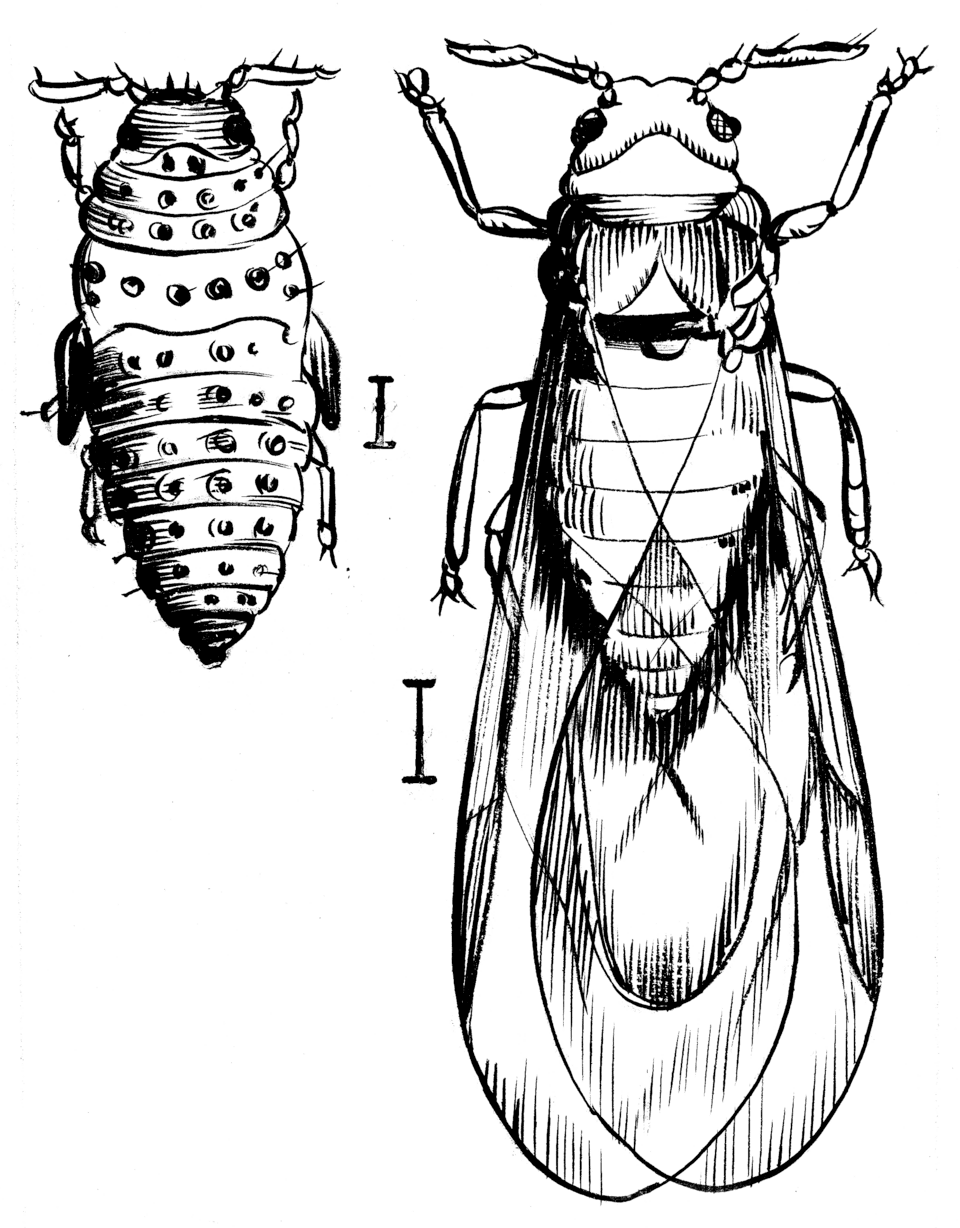
An ink drawing of two phylloxera insects, a small wingless one on the left and a larger winged one on the right.
Phylloxera: a wingless and a winged form. Pearson Scott Foresman illustration. Credit: Pearson Scott Foresman, Public domain.

The Rhône, then everywhere

1863

The louse that ate Europe

Eight years after the Bordeaux ranking, vines began dying in the southern Rhône. The cause, identified within a few years, was phylloxera, a tiny aphid that feeds on grape roots. It had come from North America, most likely on imported vines, helped by fast new steamships that kept it alive on the crossing. It spread through France and then most of Europe, and between 1875 and 1889 French wine production fell by roughly two-thirds.

The remedy, found within about fifteen years, was as strange as the disease: graft European vines onto the rootstocks of American species, which had evolved alongside the pest. Nearly every European vineyard still depends on that partnership. A few places escaped, such as Santorini's volcanic soils and Chile, shut off by desert and mountains. Others lost vines for good: Carménère, a mainstay of the Médoc, was barely replanted.

The Texan who saved France

T. V. Munson of Texas identified many of the American species whose roots rescued French vineyards. The French government decorated him in 1888.

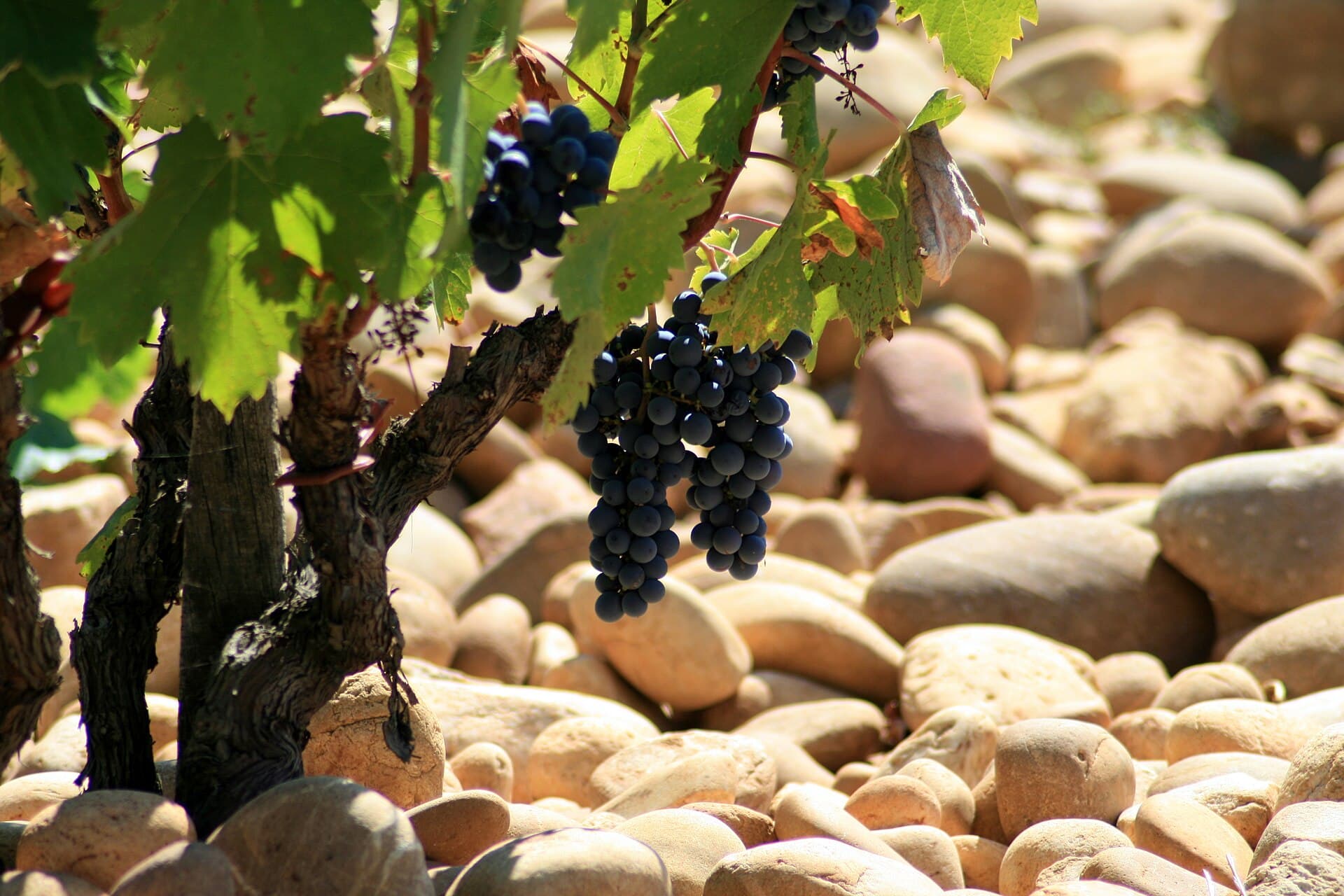
Clusters of dark grapes hanging from an old vine over a ground of large rounded pebbles in strong sun.
An old vine and the galets roulés of Châteauneuf-du-Pape. Credit: jean-louis zimmermann, CC BY 2.0.

France · Italy

1935

A place becomes the law

After phylloxera came fraud: wine from anywhere sold as wine from somewhere famous. In Châteauneuf-du-Pape, the grower and lawyer Baron Pierre Le Roy drew up rules in the 1920s on the grapes, yields and methods a name could claim. His model went national in 1935, when France created the AOC system and a body to run it, now the INAO. The first appellations followed in 1936, with Arbois in the Jura leading and Châteauneuf soon after.

Italy took the same road: DOC in 1963, then the stricter DOCG from 1980, whose first wines included Barolo, Barbaresco and Brunello di Montalcino. Note what a name does and does not promise. An appellation guarantees the place, the grapes and the method. It does not guarantee that the wine is good.

Stones that hold the sun

The rounded pebbles of Châteauneuf-du-Pape, the galets roulés, soak up heat by day and give it back at night to help ripen the grapes.

Chapter V

New Worlds

The centre of gravity moves.

A tasting in Paris and a boom in the southern hemisphere end the idea that great wine can only come from Europe. California, Australia, New Zealand, Chile and Argentina take their seats at the table.

1976 – 1990s·2 milestones

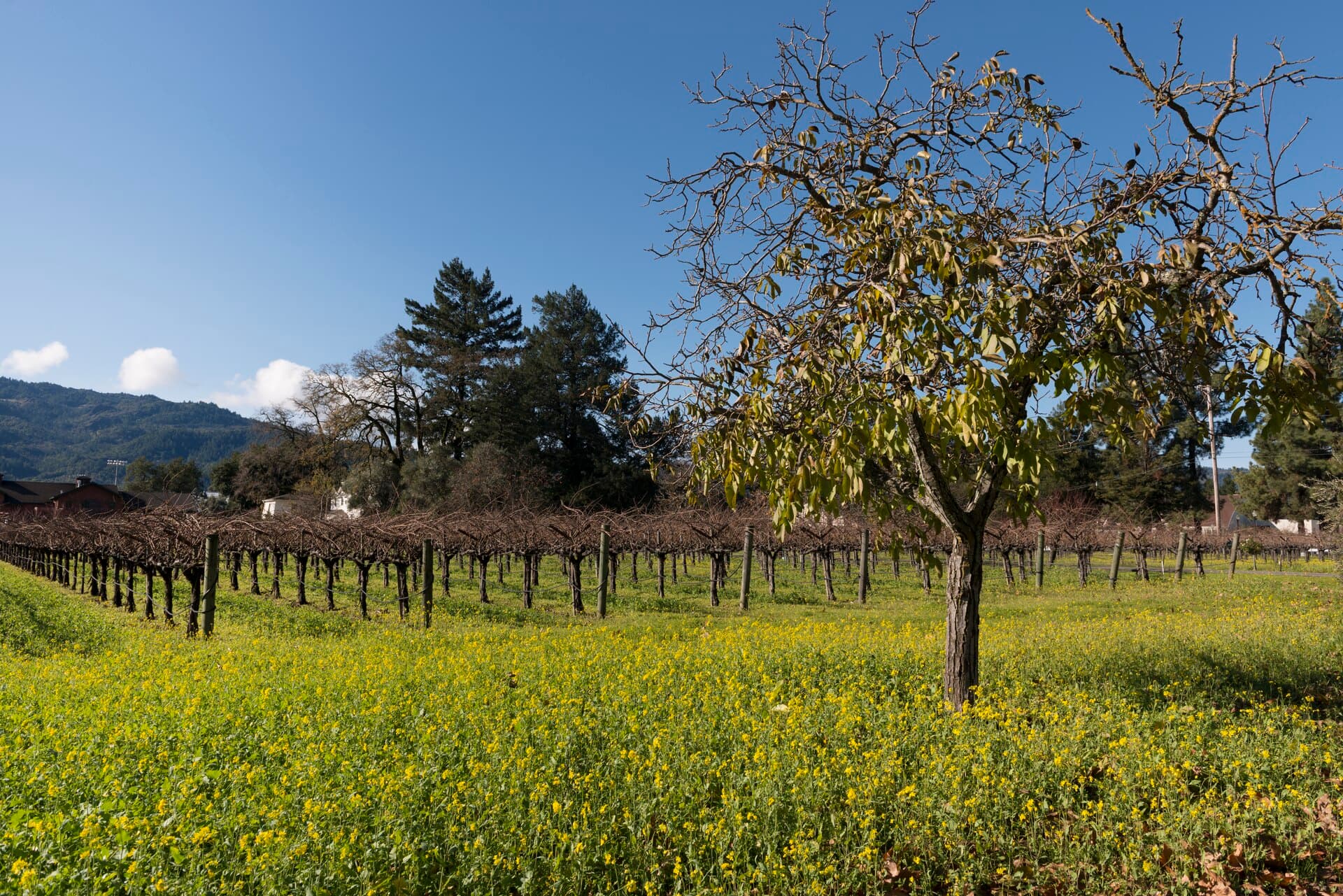
Bare winter vines in neat rows above a field of yellow wild mustard, with hills and a bare tree under a blue sky.
Winter mustard between the vines, Napa Valley. Photograph by Carol M. Highsmith, Library of Congress. Credit: Carol M. Highsmith, Public domain.

Paris · Napa Valley

1976

The Judgment of Paris

On 24 May 1976 the English wine merchant Steven Spurrier staged a blind tasting in Paris. Nine leading French judges scored red Bordeaux and white Burgundy alongside Californian wines then barely known in France. The winners were Château Montelena's 1973 Chardonnay and Stag's Leap Wine Cellars' 1973 Cabernet Sauvignon, both from the Napa Valley.

It rested on a hard-won revival. Prohibition (1920–33) had shut most of California's wineries, and only in the 1960s did pioneers such as Robert Mondavi rebuild the industry. The 1976 result did not prove that California was better. It proved that great Cabernet Sauvignon and Chardonnay could come from anywhere with the right vineyard, and it gave a generation of winemakers the confidence to try. When the reds were tasted again in 2006, Californian bottles again took the top places.

One reporter

Only one journalist attended: George Taber of Time magazine. His short report is what turned a private tasting into a landmark.

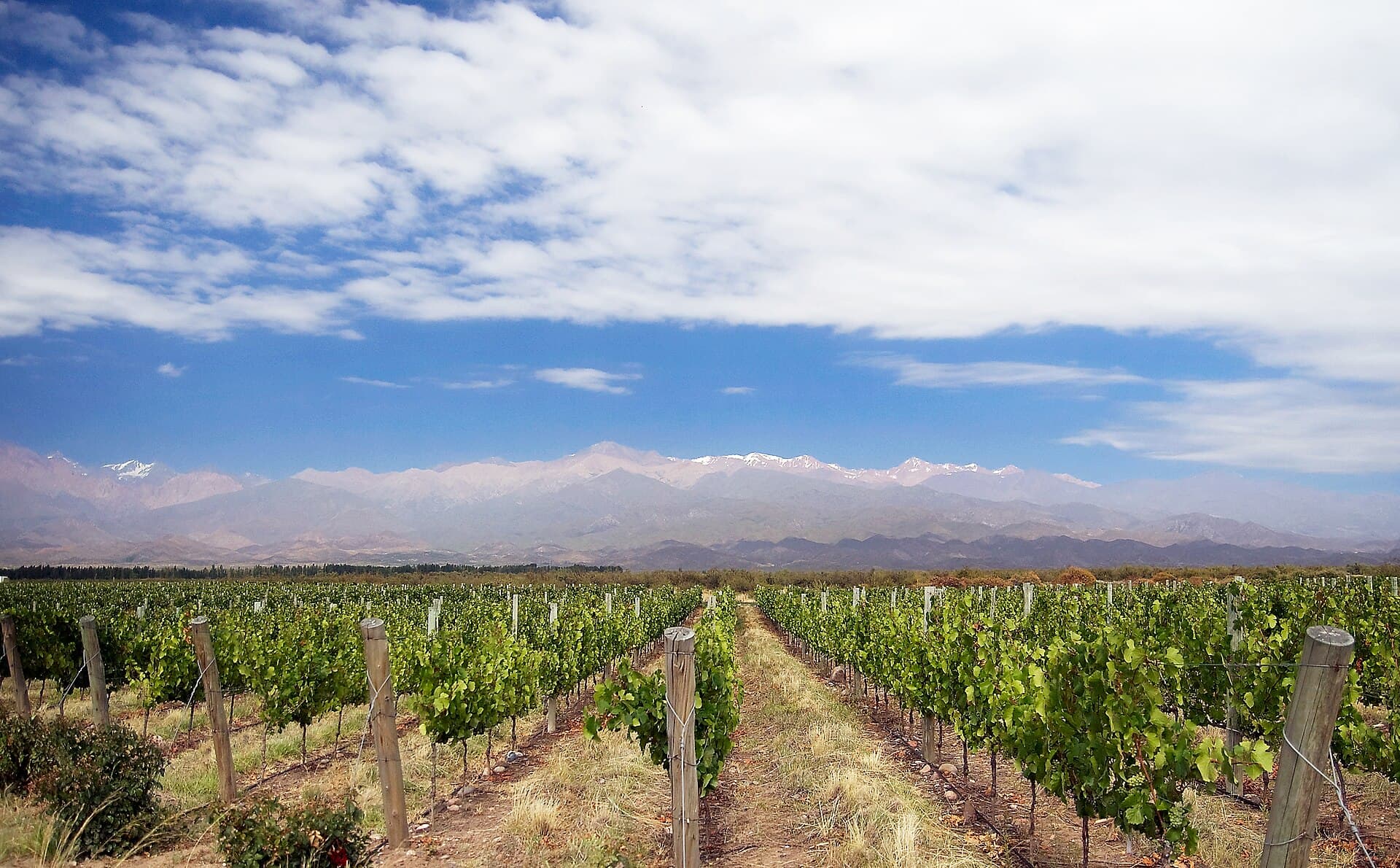
Rows of green vines under a wide sky with the snow-flecked Andes on the horizon.

Australia · New Zealand · Chile · Argentina

1990s

The southern hemisphere goes global

Australia had been quietly building icons, such as Penfolds Grange, first made by Max Schubert in 1951, and in the late 1980s and 1990s its ripe, generous Shiraz from the Barossa Valley found a worldwide audience. In 1985 the first vintage of Cloudy Bay put Marlborough, in New Zealand, and its zesty Sauvignon Blanc on the map.

In South America the vineyards were older than the fame. Chile, untouched by phylloxera, modernised when Miguel Torres arrived in 1979 with stainless steel and cool fermentation, and exports boomed after 1990. In Argentina, Nicolás Catena and others showed that high-altitude vineyards in Mendoza could make Malbec of real depth, from a grape that had almost been lost in France.

A grape's second home

Malbec reached Mendoza in the 1850s. A devastating frost in 1956 cut back its plantings in France, and today Argentina grows most of the world's Malbec.

Vineyards below the Andes, Mendoza, Argentina. Credit: David (Salentein Vineyard), CC BY 2.0.

Chapter VI

Into the Present

The family album opens. The map shifts.

DNA reveals who the grapes' parents were, a counter-movement asks winemakers to do less, and a warming climate begins to redraw the map of where wine can be made.

1997 – today·3 milestones

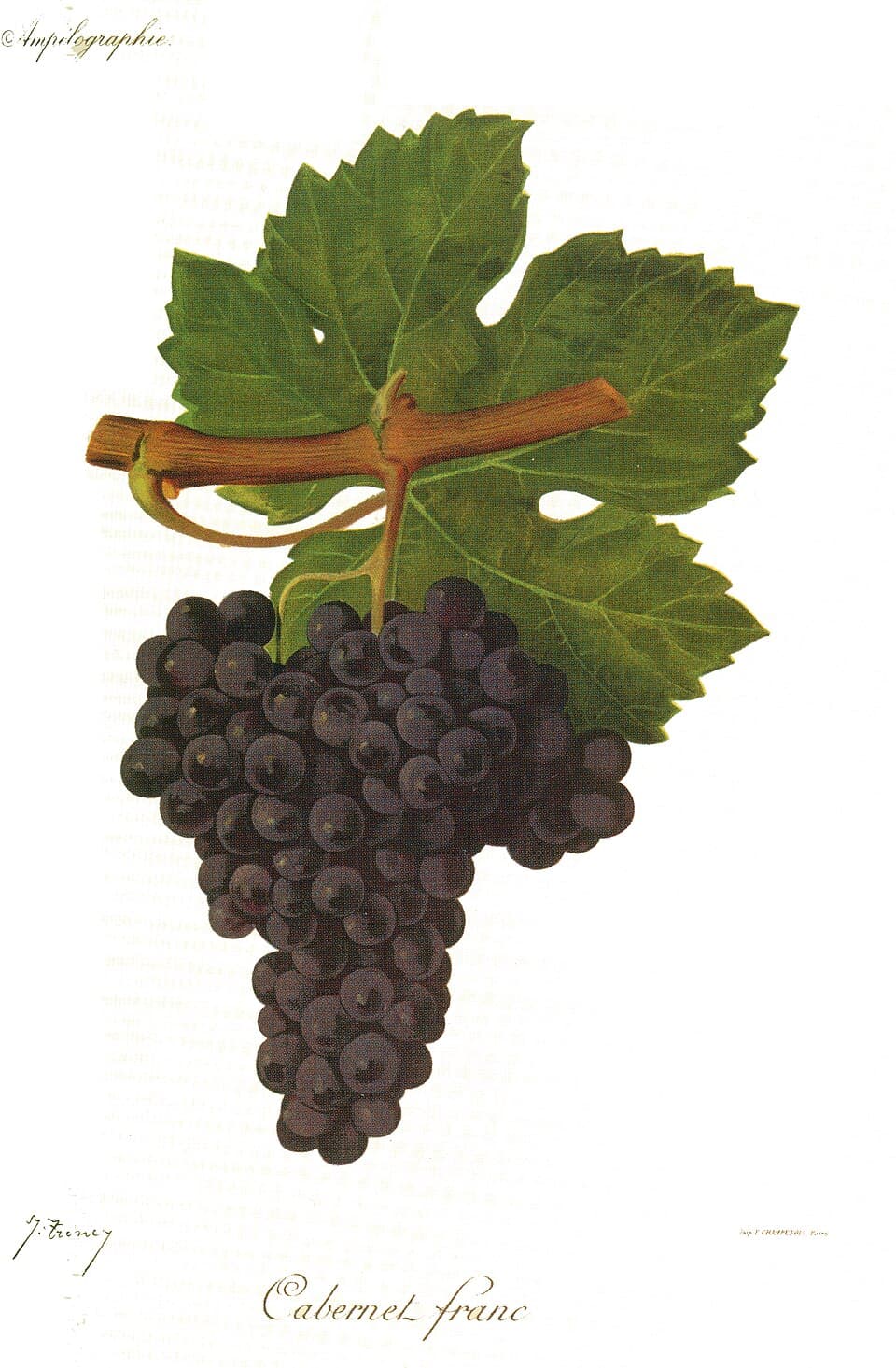
A botanical plate of a Cabernet Franc leaf and a bunch of dark grapes.Cabernet Franc
×
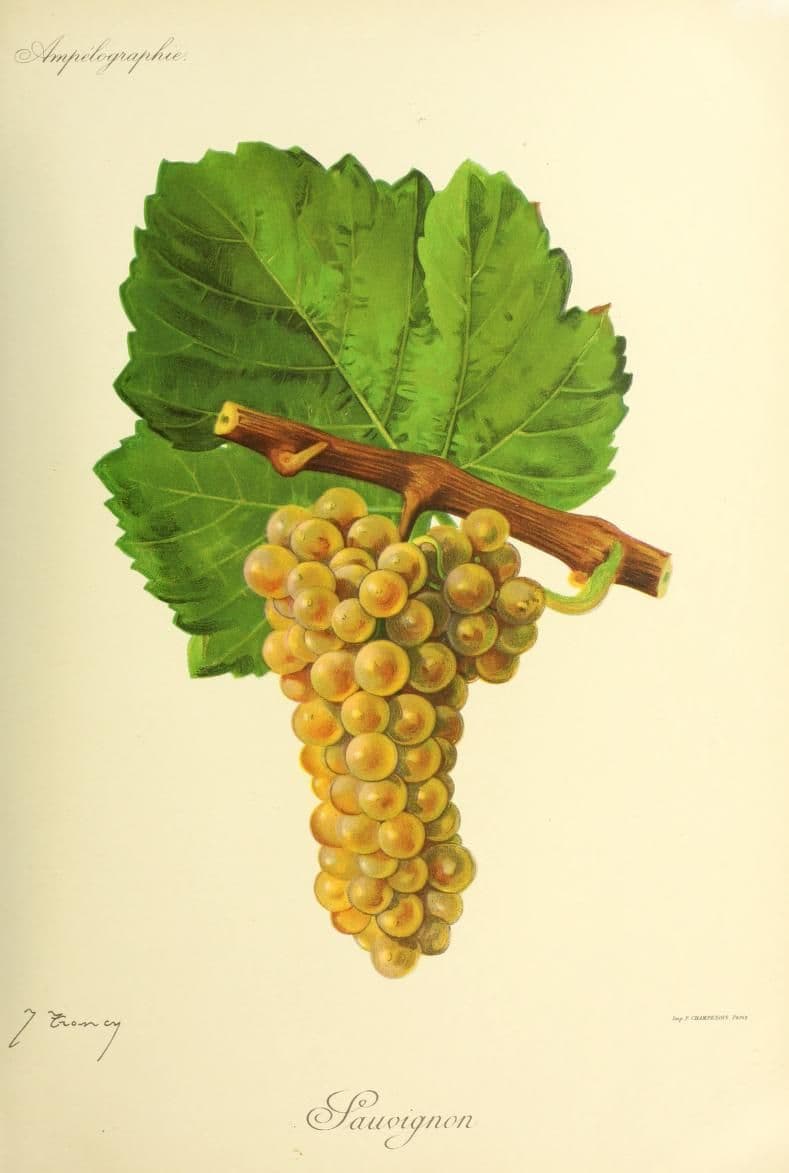
A botanical plate of a Sauvignon leaf and a bunch of golden grapes.Sauvignon Blanc
The parents of Cabernet Sauvignon, as drawn for Viala and Vermorel's Ampélographie (1901–10) by Jules Troncy. Credit: Jules Troncy, Public domain / CC0.

UC Davis · Montpellier

1997

The grape family is unlocked

For centuries a grape's identity was judged by eye: leaf, bunch, berry. The craft was called ampelography, and its masterpiece was Viala and Vermorel's illustrated Ampélographie (1901–10). Then in 1997 Carole Meredith and John Bowers at UC Davis used DNA fingerprinting to settle a mystery. Cabernet Sauvignon was a chance crossing of Cabernet Franc and Sauvignon Blanc. The world's most planted red was the child of a red grape and a white.

More followed quickly. In 1999 the same team showed that Pinot and Gouais Blanc, a humble peasant grape, were the parents of Chardonnay, Gamay, Aligoté and more than a dozen other varieties of north-eastern France. Syrah's parents, Dureza and Mondeuse Blanche, came to light by the end of the decade, and Zinfandel was matched to Italy's Primitivo and then to an almost extinct Croatian grape. In 1994 a French ampelographer had recognised that Chile's 'Merlot' was really Carménère. Every crossing on our grape lineage map is built on this work.

Siblings at opposite ends of France

Chardonnay, the white of Chablis, and Gamay, the red of Beaujolais, are full siblings: both are children of Pinot and Gouais Blanc.

Illustration: Ampelos.

Beaujolais · the Jura · Friuli

1980s

Less in the bottle

A quiet counter-movement began in Beaujolais in the 1980s. The chemist and merchant Jules Chauvet argued that great wine needs almost nothing added: healthy grapes, native yeasts, little or no sulphur. Growers such as Marcel Lapierre in Morgon followed his ideas and made lively, unfiltered Gamay, often by carbonic maceration. The idea spread to the Jura, the Loire and beyond.

In Friuli, Josko Gravner travelled to Georgia in 2000 and came home to bury clay amphorae in his cellar, a line that leads straight back to the qvevri of the first chapter. Amber 'orange' wines made with long skin contact, cloudy sparkling wines and vineyards farmed biodynamically followed. The movement has argued endlessly over its own definition. France has had an official 'Vin Méthode Nature' label since 2020, and most countries still have none.

Orange is not a fruit

Orange wine is white wine made like a red: fermented for weeks or months on its grape skins, which gives the amber colour and a grippy texture.

Illustration: Ampelos.

Everywhere

Now

The vineyard moves

Wine grapes are a sensitive thermometer. Burgundy's harvest records, kept since the Middle Ages, show 2003 among the earliest vintages in six centuries, and across Europe growers now often pick one to two weeks earlier than in the mid-20th century. Grapes ripen faster, sugar rises and acidity falls, and heat, drought, hail, frost and wildfire smoke have become ordinary risks.

Growers are adapting: picking earlier, shading fruit, planting higher and nearer the poles, and turning to grapes that cope with heat. In 2021 Bordeaux approved six new varieties, including Touriga Nacional, Marselan and Alvarinho, better known as Albariño. Southern England now makes serious sparkling wine, and Assyrtiko, the Santorini grape, is turning up in Australia. The map of wine is being redrawn once more, and this chapter is still being written.

August in Champagne

In some recent hot years, harvest in Champagne has begun in August, a start once thought unthinkable.

The story continues

Every glass is a chapter

The vine is still travelling, and the last page has not been written. Follow any thread from this story into the grapes and places that carry it.

Every image on this page is in the public domain or openly licensed, with its credit under the picture. Dates follow the most widely cited historical and archaeological sources; where the record is disputed, the text says so.